A Charged Subject, Part 2
By Michelle Peot
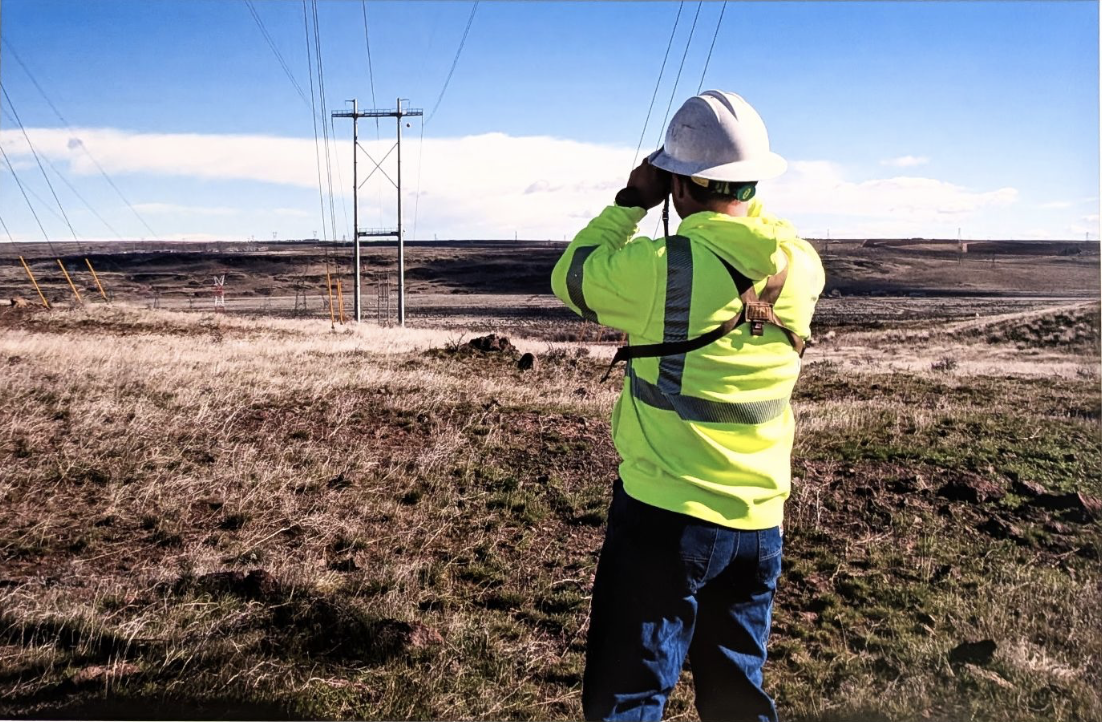
We previously reported on Rocky Mountain Power's (a.k.a.PacifiCorp's) proposed transmission line project, a ~54 mile 345kV, above-ground line from Cedar City to the existing Purgatory substation in Washington Utah. This week multiple open houses were held with project representatives, including a crowded meeting in Leeds on October 6th. A remote session will be held on October 14th; registration is required.
Routing evaluation factors
The routes will be evaluated on multiple criteria. Several project representatives were asked about how the various factors were weighted. While they didn't indicate that categories were being explicitly weighted, they stated that magnitude of impact is important. Project timing was also noted as a driver.
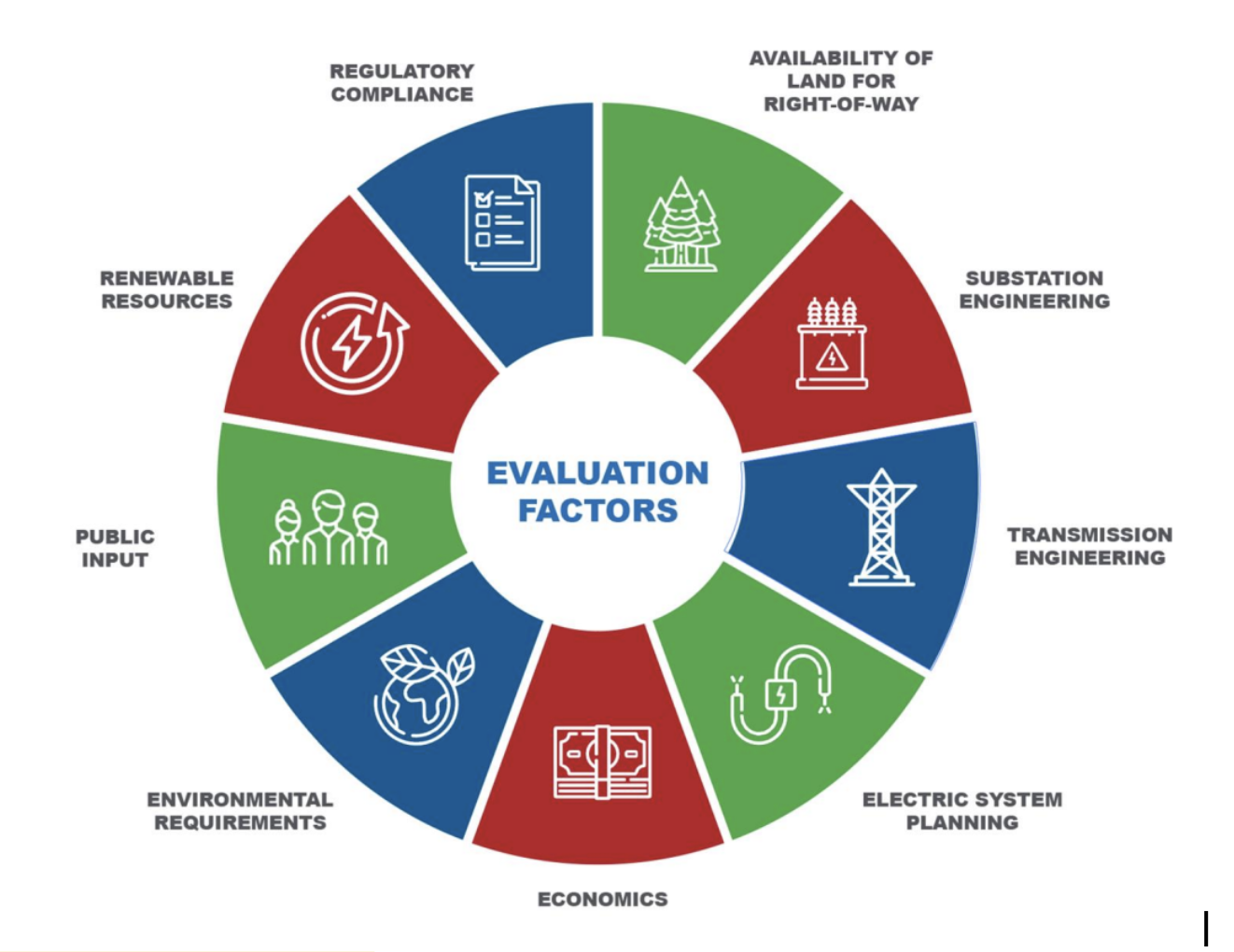
Routing evaluation factors from Rocky Mountain Power's slide deck
Because the route will cross federal land, the project will need to go through the National Environmental Policy Act (NEPA) review process. During this process, several alternative routes will be evaluated for environmental impact. Rocky Mountain Power is hoping to start this process in Q1 of 2027; however, timing is contingent upon Bureau of Land Management scheduling. This will also give the public additional opportunity for route input; however, there has been a significant reduction in NEPA rigor, public comment windows, and consideration of public input with the current federal administration.
When asked why future developments were getting prioritized over existing residents' properties, it was stated that private property routing decisions were largely based on economics - to be developed platted land is still costly even if vacant. The irony is that development pressure in the larger municipalities is being used to justify the project, while the impact appears to fall disproportionately on current rural residents.
Route evaluation shortcomings and remediation
Beyond floodplains as a geohazard for construction, it appears that little to no consideration has been given to impact on aquifers, watersheds, water infrastructure, high fire risk zones, and drinking water source protection zones. Project staff expressed interest in factoring in impact on rural water districts, including Leeds' drinking water district. Additional water-related data is being submitted to inform routing.
Permitting
Construction will require multiple permits including:
Right-of-way grant from the Bureau of Land Management, which requires following the NEPA process.
Certificate of Public Convenience and Necessity (CPCN) from the Utah Public Service Commission
Local conditional, special use, and building permits
Tower construction and maintenance
The steel transmissions towers will be built using a coating that is designed to rust to better blend into the landscape. An engineering rep stated that they follow the state's storm water permitting process and required dust mitigation code, which residents know is essentially unenforced. During installation, crews will drill down 40 feet for each tower.
Lines are inspected twice annually. After construction, the disrupted ground will be reseeded with native plants for federal lands, with other options available for private land easements. For federal public land rights-of-way, PacifiCorp has traditionally used herbicides to control invasive plants. This will require approval from federal agencies.
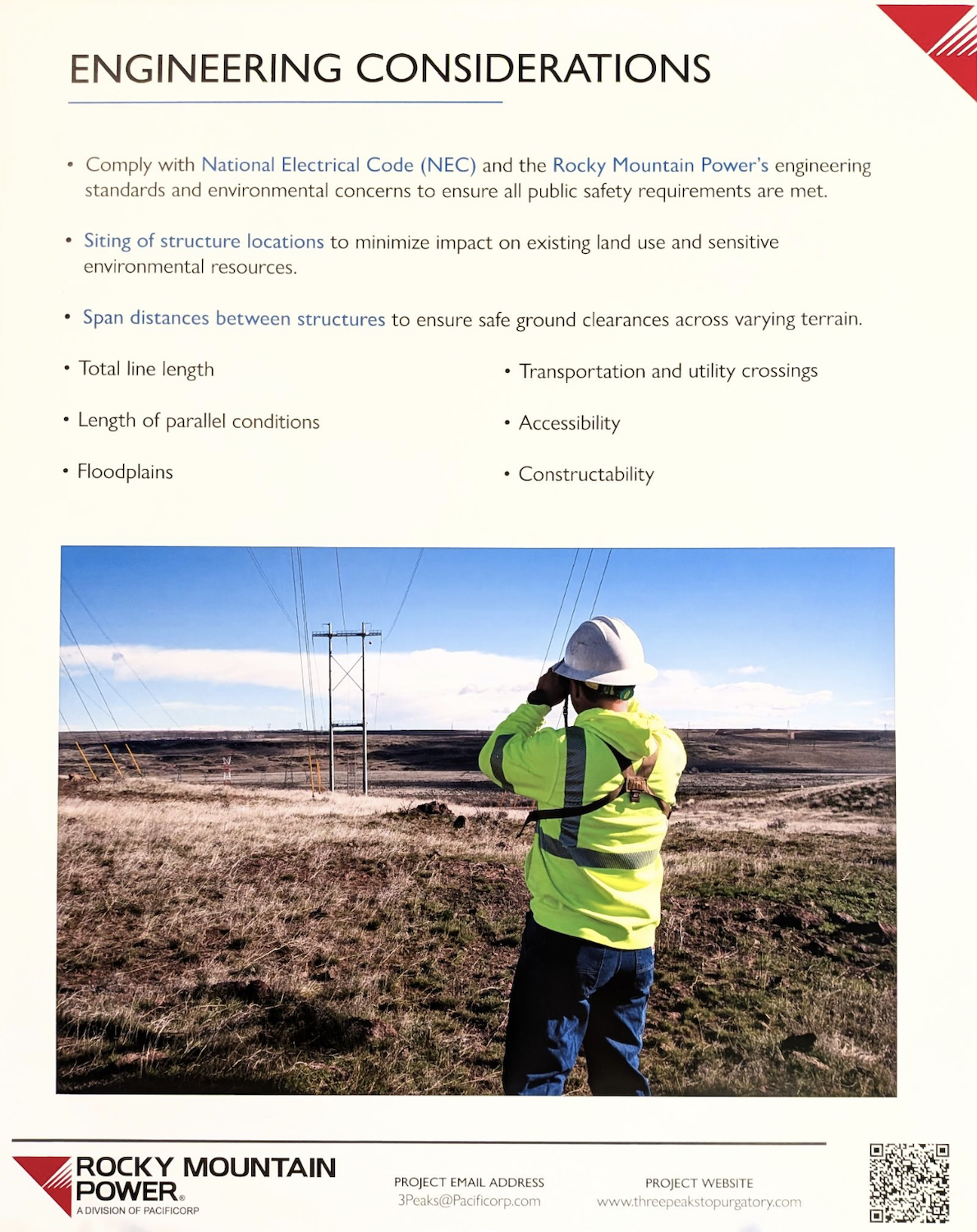
Engineering considerations from the open house
Project funding
The transmission line will serve multiple utility companies, including Rocky Mountain Power, and Dixie Power.
In response to a question about whether developer impact fees would cover the majority of the cost of the project, multiple project representatives stated that project capital expenses will be paid for by rate increases, which must be approved by the state's Public Service Commission. Given the developer-centric attitudes, it seems unlikely that there will be pushback to put the burden on new developments.
Wildfire considerations
When asked about wildfire considerations in routing, an engineering representative stated that the risk of wildfire was low because the towers are taller than the ones that have traditionally and repeatedly caused devastating fires in California. However, when asked for a third-party data source on the topic, none was provided.
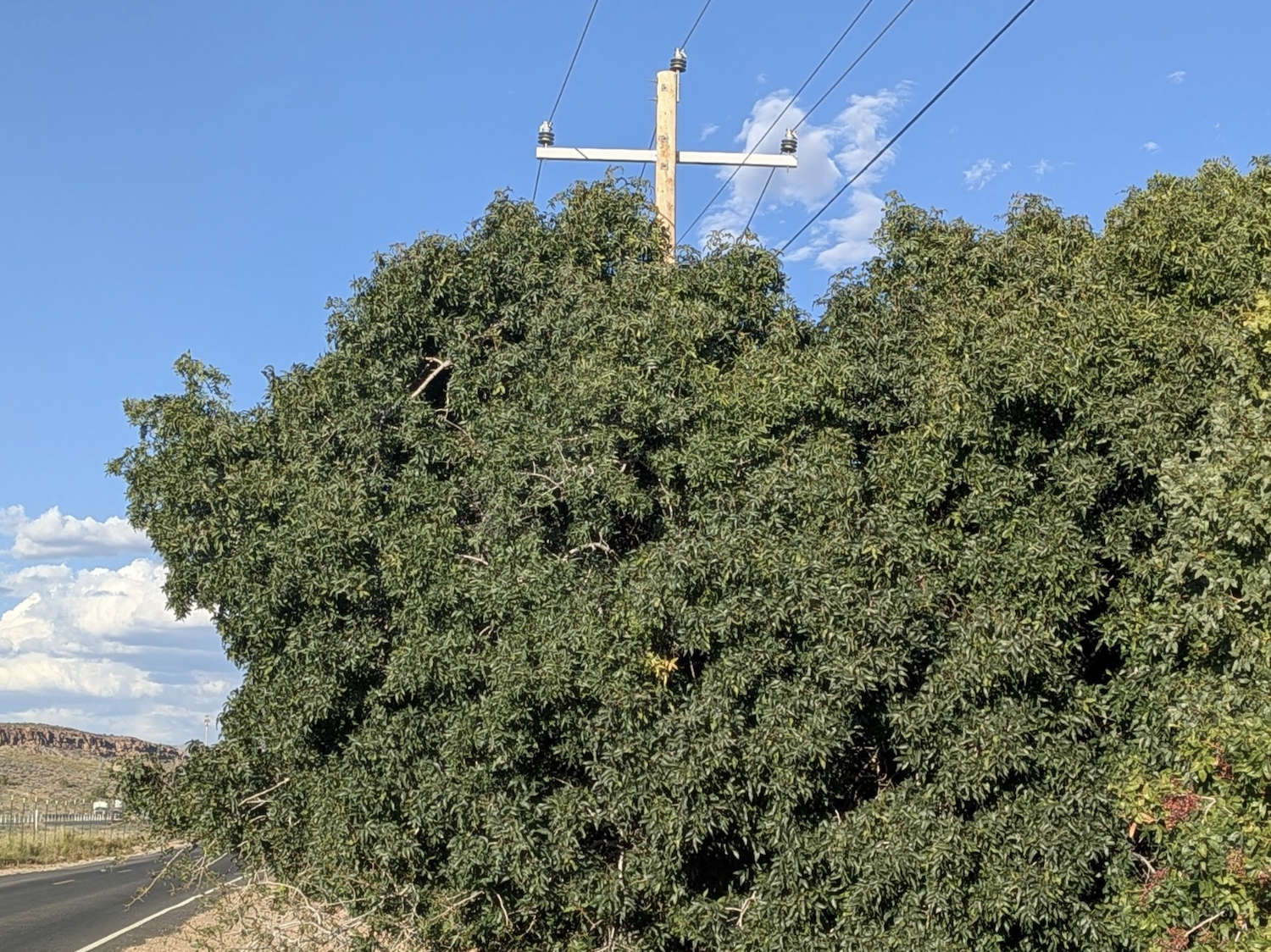
Overgrown vegetation under high-risk, low elevation transmission lines near Leeds
Wildfires not only cause immediate structural and ecosystem damage, but the aftermath of the debris and silt runoff undermines watersheds and infrastructure, including reservoirs. The watersheds around Leeds, Toquerville, and Harrisburg are critical for drinking water for tens of thousands of local residents, as well as providing water for agricultural businesses.
Utility companies have been pressuring western states to offload fiscal responsibility for damage caused by the wildfires they cause. Utah has been one of the few states to concede. In 2024, Utah state representatives passed a bill that allows Rocky Mountain Power to charge its customers for a wildfire fund that covers costs incurred from a fire the company causes above and beyond its insurance payouts.
Utah's new wildland urban interface (WUI) risk map shows that Leeds has among the highest risk of wildfire in the area. With home insurance companies looking for any excuse to raise rates or cancel homeowner policies and the history of California's transmission line fires, running transmission lines through the highest risk WUI areas seems shortsighted.
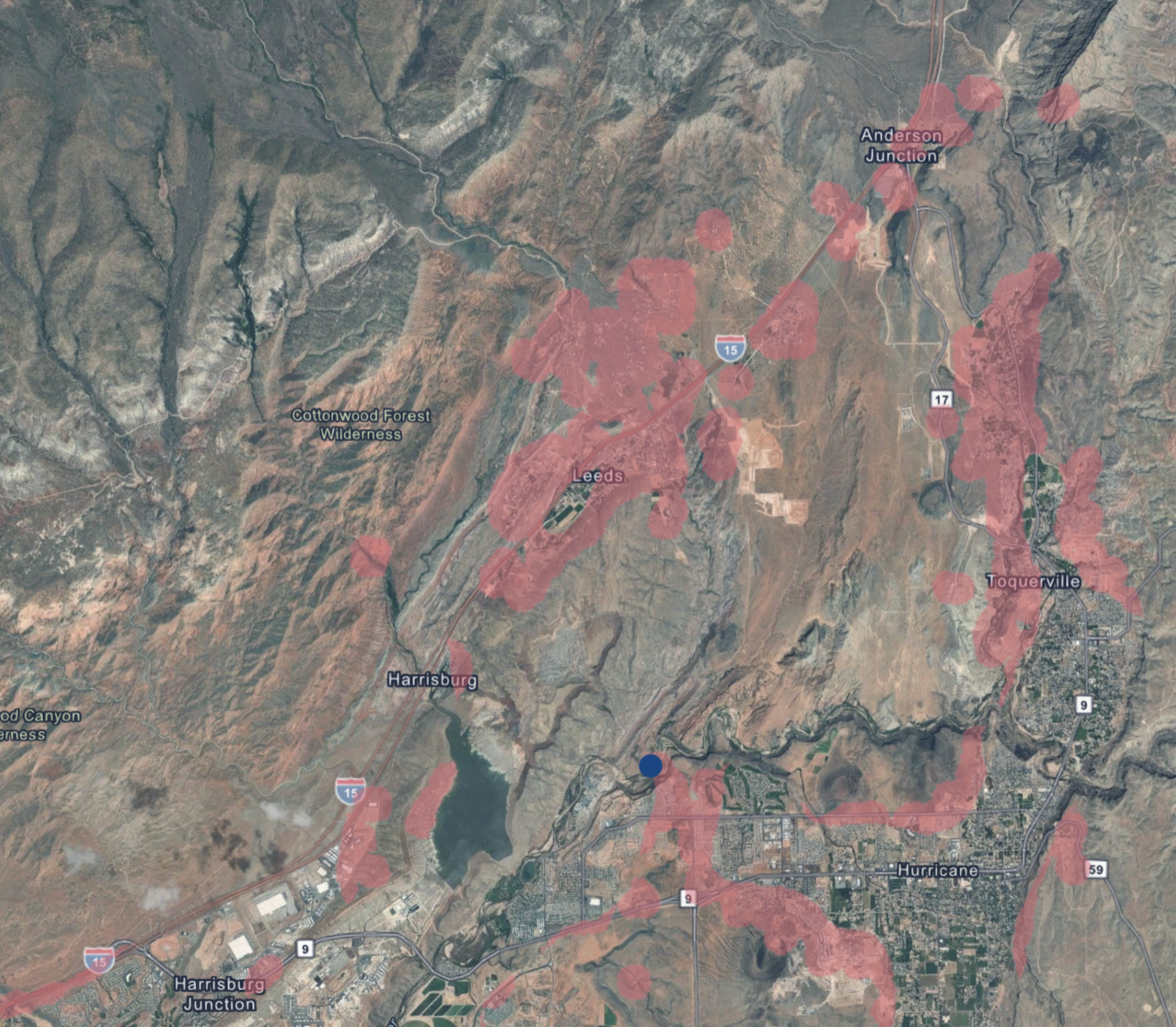
Wildland fire risk from the High Risk Wildland Urban Interface portal
Public comment
No routes, preferred or alternative, have been finalized. Solicitation of public feedback is ongoing, including in person at the upcoming Rocky Mountain Power open houses.
A virtual option will also be hosted Wednesday, October 14, 2026, from 12 p.m. to 1 p.m.
Virtual Open House
Register at ThreePeakstoPurgatory
Written public comments may also be submitted on the ThreePeakstoPurgatory site. Check the website to reconfirm date, time and location, as event logistics have been changing.
Project questions may also be emailed to 3Peaks@PacifiCorp.com. Additional outreach sessions will be held during subsequent phases; however, the best opportunity to influence routing is now.