Room For Everyone, Even On The Pickleball Courts
by the toquerville sentinel staff
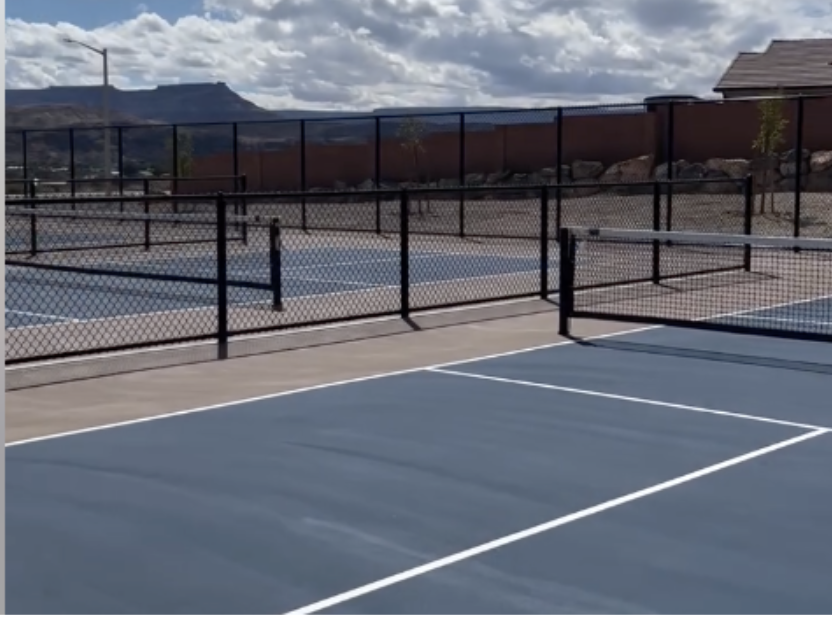
Building a town and building a community aren't quite the same thing. I found myself thinking about that while watching the October 7 City Council meeting, and about something Ram Dass once said. “We're all just walking each other home.” It's a beautiful idea. The harder part, of course, is making sure nobody gets left behind.
Rome Wasn’t Built In A Day, Neither Was Westfield Park Watch Here 7:44
Now that Toquerville has four solid pickleball courts at Westfield Park, comes the tricky part of figuring out how everybody gets a turn. How do we share them fairly? The city already charges fees to reserve its recreational facilities, so paying to guarantee a court isn’t anything new. But the two courts at Center Street Park had always been rented together. The city proposed changing its uniform fee schedule to allow individuals to reserve a court individually or book several at once. Anyone could still show up and play for free when a court wasn’t reserved. The fee simply meant you could count on having a court waiting for you.
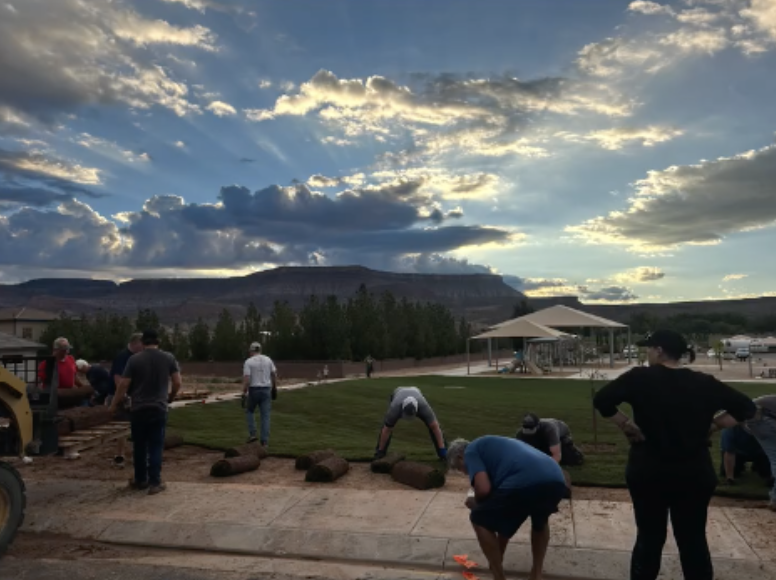
But Councilman Olson raised concerns about what might happen as pickleball continues growing in popularity. His worry is that organized groups and visitors could reserve all four courts, leaving local residents with fewer opportunities to play at these facilities that our city helped fund.
He pointed out that courts in St. George are often so busy that players can wait an hour or more for a chance to play, even without reservations. And in Southern Utah, where summer afternoons can feel like punishment for something you did in a previous life, the most desirable playing hours tend to be those precious morning and evening hours.
The council kicked around several ideas, including limiting reservations to two courts at a time, establishing nonreservable peak hours, increasing rates for nonresidents, and making reservation schedules available online.
Others thought it made more sense to try the system first and make changes if problems actually develop. The council approved the fee schedule changes without adopting a two-court reservation limit. Hopefully, nobody will need to book a reservation three weeks in advance to play a friendly game with neighbors. But if pickleball has taught us anything, it’s that people take their court time seriously. Time will tell.
Between A Gravel Pit and a Hard Place Watch Here 37:32
Gravel trucks are a necessary part of construction. It’s just that nobody particularly wants to see them rumbling down the nearby streets. So when Steve Gilbert proposed a new route across Bureau of Land Management (BLM) land, it was an idea that could make both his gravel operation and the neighbors enjoy a little less truck traffic. Gilbert wants better access to the northern part of his gravel pit, and his trucks currently use a route along residential streets that get congested. Fewer trucks on the streets, and a better way in and out of the pit.
Not a bad arrangement, assuming everyone can agree on where to put the road. Of course there’s a catch. Because the proposed route crosses federal land, the city can’t simply show up with a road grader and get to work. To establish a public right-of-way, Toquerville has to apply to the BLM. Gilbert agreed to pick up the tab for the application, engineering, and surveying, while the city would hold the right-of-way for public use. In other words this wouldn’t be Gilbert’s private driveway to the gravel pit. It would be a public corridor that could eventually serve a much bigger purpose.
Then came the decision of how wide to make it. Gilbert’s original survey allowed for 60 feet, but the city wanted 100. Even roads need room to grow. The wider road would allow for possible bike lanes, grading, sidewalks, and whatever else a growing town might need down the road. The council agreed on a proposed 100-ft wide right-of-way. Better to make room now than discover years from now that the new road needs to grow and there’s nowhere left for it to go. The proposed road could eventually become part of a larger road connection toward Anderson Junction Road, something the city is considering in its transportation master plan.
There are still a few obstacles between the idea and the actual road, including property arrangements, coordination with the water district, and the small matter of building the thing. In the end, the council voted unanimously to move forward with the joint BLM application. But nobody’s pouring asphalt yet. They’re just asking permission to use the land, which is considerably less exciting than watching a road appear but generally a necessary first step. If everything works out, the neighbors could see fewer gravel trucks, and Gilbert could get access to his pit, and Toquerville could secure a piece of its future road network without paying the initial application expenses. All that from a conversation about where to send the gravel trucks.
Financial Audit, and a Scary Scarecrow Watch Here 11:56
City Manager Ben Billingsley had some good news. After spending weeks getting Westfield Park ready, public works crews are finally getting back to the regular maintenance jobs that nobody gives much thought to until something stops working. The city's annual financial audit is also ahead of schedule. The auditors have finished their site visit, and staff are tying up the remaining loose ends. No significant concerns have been reported, although the final financial statements haven’t yet been presented to the council. An uneventful audit is generally a beautiful thing.
And then somehow we got to scarecrows. Toquerville entered the Washington County Water Conservancy District's Scarecrow Festival at Red Hills Desert Garden. Public works helped build the display, and another staff member took responsibility for making it suitably gruesome. Billingsley wasn’t giving away any details, except to say that visitors would recognize Toquerville's entry without reading the label. I'm not entirely sure whether that's a compliment to our town or something we should be mildly concerned about. Is it charming? Disturbing? Does it have a familiar face? I have questions, and Billingsley wasn’t answering them. I now must see this scarecrow.
A Little Less Us and Them, A Little More Us Watch Here 14:42
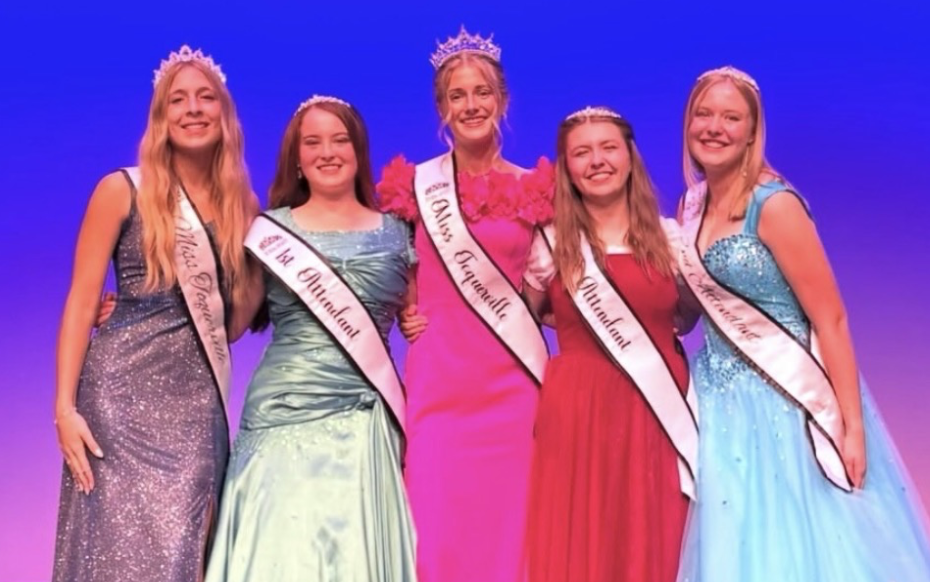
Photo Source: Chelsea Colson, via City of Toquerville’s Facebook page
The council welcomed Toquerville's 2026–2027 royalty: Miss Toquerville Liza Leavitt, First Attendant Emmeline Welker and Second Attendant Emily Bunker. The young women introduced themselves and shared a little about their lives, interests and what they hope to do in the coming year. Between them, their interests included lacrosse, motorcycles, ballroom dancing, reading, hiking, ballet, pickleball, and poetry. They will spend the next year representing Toquerville at festivals, parades, holiday celebrations, and community service projects. The conversation included everything from future plans and favorite hobbies to some practical pageant advice. Learn to change clothes quickly. Who knew representing your hometown involves a surprising amount of wardrobe management.
Then conversation turned more meaningful when two of the young women spoke about wanting to bridge what they see as a divide between church members and people who don’t belong to the LDS church. They hope their year of service will provide opportunities to bring people together. I found myself thinking about that long after the conversation moved on. Small towns take pride in being relatively close-knit, but belonging can feel very different depending on where you’re standing. When you’ve always felt at home somewhere, it’s easy to assume everyone else does too. And it’s easy to miss the people who don’t. We spend a lot of time talking about what our town needs. Roads, parks, buildings, places to gather. All worthwhile things. But you can build every one of them and still have work to do when it comes to making people feel welcome. For those two young women representing our hometown, that’s a pretty meaningful thing to care about.
Everything is Flowing Along, Except For The Rotten-Egg Smell Watch Here 5:03
The Ash Creek Special Service District began its report with “Nothing significant to report.” That is what we hope to hear about a wastewater treatment plant. But naturally, there were a few things to discuss. The plant is running well, but hydrogen sulfide levels have been higher than expected. It's one of those rotten-egg gases whose presence is difficult to ignore, particularly if you're standing downwind. Besides the smell, it eats away at concrete and metal over time. The district plans to coat some channels with protective epoxy. Mike Chandler said the issues were minor, and council members who had toured the facility were impressed with how well it was designed and operated. For residents, the good news is that the plant is doing its job. It just needs a little extra protection from one less charming byproduct.
A New Firehouse and the Trouble With a Little Smoke Watch Here 6:30
Hurricane Valley Fire District Chief Robert Cooper announced that the district had awarded a contract for its new headquarters station, with hopes to break ground during October. The chief joked that crews might have to bring their own shovels just to get things started. He reported that Station 43 responded to 120 calls in September, including 24 calls within Toquerville, and approximately 80 percent of those calls were medical emergencies. He also mentioned that several calls reporting structure fires turned out to be nothing more than controlled burns. A plume of smoke spotted from the freeway is enough to send firefighters rushing to the scene, only to discover someone's burning a brush pile. Chief Cooper reminded residents to obtain burn permits before lighting up. Burn season runs through November 15, and the permits let dispatch know where fires are supposed to be burning and which ones aren’t. A little paperwork seems like a reasonable trade for not having the fire department racing toward your perfectly legal afternoon with a pile of branches.
Someone Came To City Hall Just To Say Thank You. Imagine That Watch Here 26:27
Public comment usually means someone’s upset about something. There’s generally a grievance in the vicinity about a road or buildings, but not this time. Mandy Leavitt came to say thank you. She praised the council for its work that happens outside public meetings and for members’ willingness to work together. Just a little appreciation.
Upcoming Events Watch Here 23:52
The council highlighted several upcoming community events.
OCT 9: Movie in the Park @ Westfield Park. The movie began at dusk. The featured film was Hotel Transylvania, with complimentary popcorn and a food vendor. Attendees were encouraged to bring chairs, blankets, and water.
OCT 24: Fall Festival @ Center Street Park. Plans included approximately 20 decorated vehicle stations for trunk-or-treat activities, a walking taco station, and possibly grilled corn.
Looking ahead, the council also discussed the holiday tree lighting, Wreaths Across America activities, a winter lights parade, and next year's Easter egg hunt, Memorial Day programming, Fourth of July celebrations, and Peach Days. The royalty members will participate in many of these activities throughout their year of service.
What Happens In Closed Sessions, Stays In Closed Sessions Watch Here 50:08
The council concluded its public proceedings by voting to enter a closed meeting. And with that, the public portion of the meeting came to an end, because the public doesn’t get to come along. For those unfamiliar with the term, a closed meeting is a portion of a city council meeting that isn't open to the public. Utah law allows city councils to meet privately when dealing with sensitive matters, such as lawsuits, security concerns, property transactions, or issues involving an individual's character, professional abilities, or health. The council listed these as possible reasons for closing the meeting but didn't say which one they would actually be discussing.
Next council meeting: Wednesday, Oct 21.