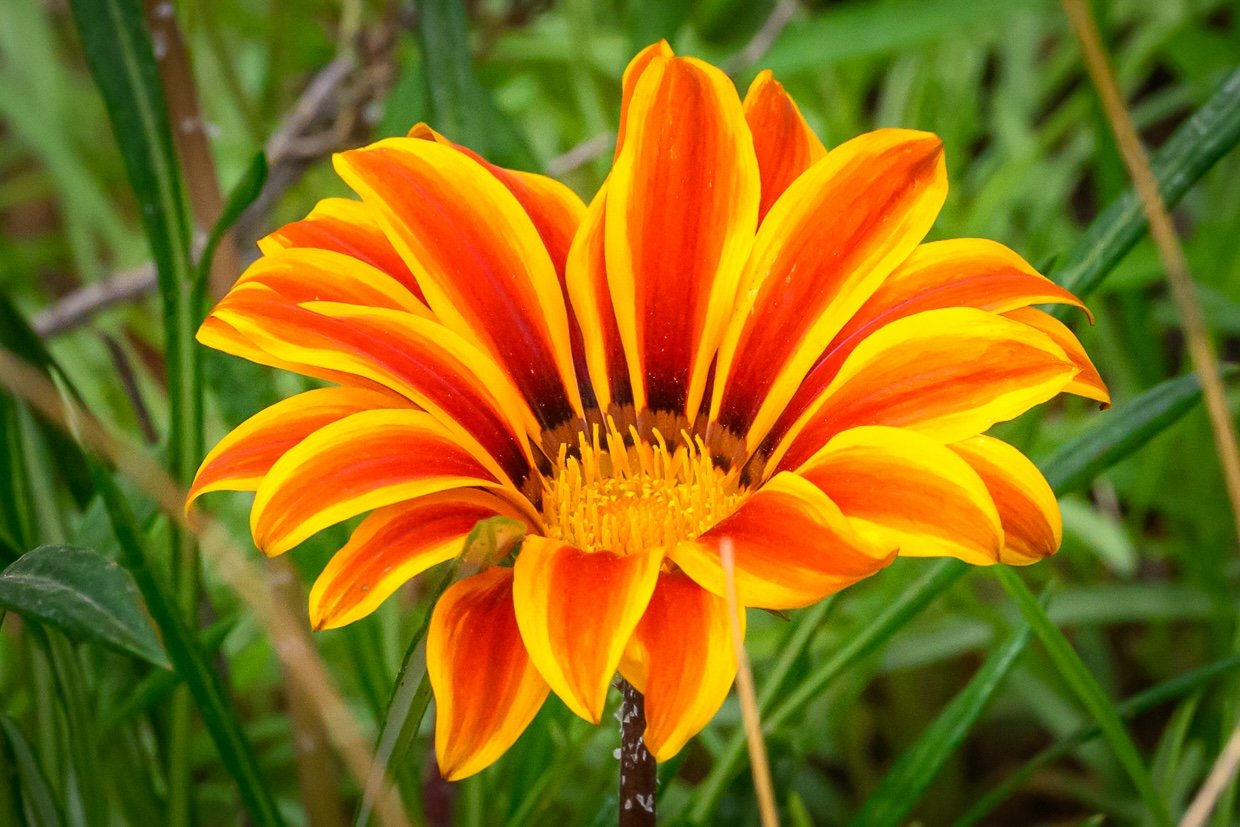
Local Garden Beauty by Lori Cole
Happy summer, everyone! This meeting (June 3) was shorter than most, and here are the highlights and a commentary about trees.
City Department Reports
Hurricane Valley Fire District: Battalion Chief Tyler Ames reported that last month, there were 17 calls for service: 1 fire, 12 EMS, and 4 calls for public assistance. So far this year there have been 16 wildland fires in Washington County.
Assistant City Manager Report: Darren LeFevre advised that Firelight is currently grading phases 4, 5, 6, and 7, in case you have noticed the dust.
The Toquerville Reservoir construction continues. Basalt for the dam construction is being harvested from the top of the hill across from Sapp Brothers Truck Stop and trucks are hauling clay material from 3000 South in Hurricane to lay on top of the liner.
City Manager Report: Ben advised that the city has been working with the fire district and the wildland fire crew regarding the Wildland Urban Interface for Toquerville. He said it has been a more complicated project than anticipated due to the “changing dynamic of the community.” The city is tasked with identifying which areas of the city will be subject to the Wildland Urban Interface Code. This is separate from the state’s program with it’s annual fees and property inspections, but related.
Please see the Toquerville Sentinel blog dated 1/30/2026 for information about the Wildland Urban Interface and how it affects every Toquerville resident.
Chief Toquer Reservoir Recreation – the committee is looking for funding sources.
Ash Creek Special Services District: They will be issuing a bond for the sewer improvements. The bond will be paid for by Virgin City residents and businesses. No one in Toquerville will be paying for the bond.
Discussion on Tree Height and Maintenance -When “Small Issues” Reveal Big Questions About Our Town
The 14-Foot Rule—and Why It Matters
The council spent a large portion of the evening discussing how to enforce a rule requiring tree branches to be trimmed up to about 14 feet above the ground. The reasoning is straightforward: better clearance helps emergency vehicles, improves safety, and keeps streets accessible.
Fair enough. But here’s where things get complicated.
Enforcing that rule across the entire city would likely mean inspecting countless properties, measuring trees, possibly hiring arborists, and asking homeowners to significantly alter landscaping that may have been in place for decades .
And suddenly, a simple safety ordinance starts to feel a lot less simple.
A Community That Isn’t One-Size-Fits-All
What stood out in this meeting wasn’t just the issue—it was the hesitation.
Instead of jumping straight into strict enforcement, council members pushed back. They asked whether it made sense to treat every street the same. Should a quiet neighborhood cul-de-sac really be held to the same standard as a main collector road?
Some suggested a complaint-based approach instead of proactively policing every property. Others floated the idea of tailoring enforcement depending on the type of street. And honestly, that feels like common sense.
Because Toquerville isn’t a cookie-cutter city. It’s a place where older neighborhoods, newer developments, and rural-feeling spaces all coexist—and what works in one area doesn’t always make sense in another.
The Real Question: How Much Government Is Too Much?
I believe we can all agree that emergency vehicles should not be hindered or blocked by low hanging branches. Safety matters. But there’s also a point where enforcement starts to feel intrusive or overreaching—especially when it affects private property in a very visible way.
Do we really want city teams measuring trees across town? Do we want homeowners worrying about compliance notices over something as subjective as landscaping? This discussion showed that even the council is wrestling with these questions.
A Refreshing Moment of Restraint
In a time when many government decisions feel rushed or predetermined, this meeting offered something refreshing: restraint.
The council didn’t finalize a plan. They didn’t vote to roll out strict enforcement. Instead, they asked staff to come back with more options. They slowed the process down. That matters. Because sometimes good governance isn’t about acting quickly—it’s about asking better questions before acting at all.
Why Residents Should Pay Attention
If you skipped this meeting because “it’s just about trees,” you missed something bigger. This was really about:
How rules are enforced
How much flexibility residents are given
How local government balances safety with personal property rights
And those questions apply to far more than landscaping. They touch on the future of zoning, development, and how Toquerville grows—issues that affect every single resident.
The Bigger Picture: Who Gets a Voice?
One thing that didn’t dominate headlines—but always matters—is public involvement.
Meetings like this only work when people show up, pay attention, and speak up. Whether it’s tree regulations, road access, or water policy, these decisions shouldn’t happen in a vacuum.
Because if the community stays quiet, it’s easy for even small policies to drift into something much bigger than intended.